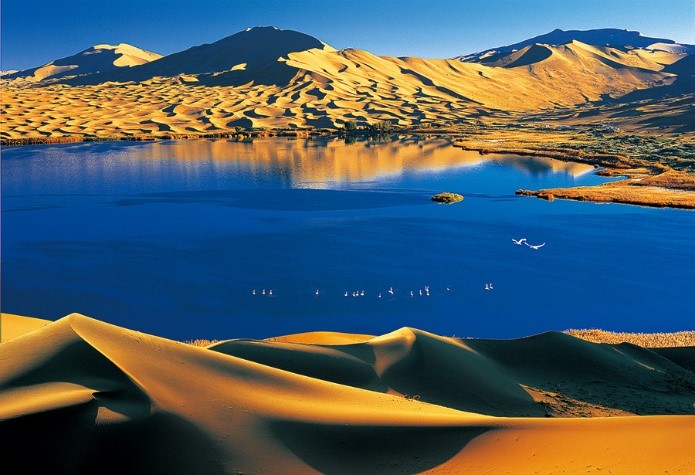
Inner Mongolia Plateau
Introduction
The Inner Mongolia Plateau, located in northern China, is one of the country's most expansive and ecologically diverse regions. Stretching across the Inner Mongolia autonomous region and portions of neighboring provinces such as Hebei, Shanxi, and Gansu, the plateau forms a critical geographical and cultural bridge between the heartlands of China and the steppes of Mongolia. Covering an area of approximately 1.2 million square kilometers, it represents one of the most significant plateaus in Asia, both in terms of its size and ecological importance.
Geography and Topography
The Inner Mongolia Plateau sits at an average altitude of 1,000 to 1,500 meters above sea level, characterized by rolling grasslands, deserts, and undulating hills. Its western expanse transitions into the Gobi Desert, creating a stark contrast between the arid desert zones and the lush grasslands to the east.
Several major rivers, including the Yellow River, run through the plateau, providing essential water resources for agriculture and animal husbandry. The Ordos Plateau in the south is particularly known for its loess soil and distinctive landforms.
Climate and Ecosystems
The Inner Mongolia Plateau experiences a semi-arid to arid climate, with long, cold winters and short, warm summers. Precipitation varies significantly across the region, ranging from 400 millimeters annually in the eastern grasslands to less than 100 millimeters in the arid west.
Despite its challenging climate, the plateau supports a variety of ecosystems, from grasslands to desert habitats featuring drought-resistant plants like saxaul and tamarisk. The area is home to numerous endangered species, including snow leopard, and bustards, underscoring its role as a vital biodiversity hotspot.
Historical and Cultural Significance
The Inner Mongolia Plateau has played a pivotal role in the history of China and Central Asia. Historically, it served as a critical passageway for nomadic tribes such as the Xiongnu, Xianbei, and Mongols, whose movements shaped the cultural and political landscapes of the region. The plateau's strategic location made it an integral part of the Silk Road network, facilitating the exchange of goods, ideas, and cultures.
Today, the Inner Mongolia autonomous region is known for its rich cultural heritage. Traditional practices such as throat singing, wrestling, and the Naadam Festival reflect the enduring influence of the nomadic lifestyle on the region's cultural identity.
Economic Activities and Challenges
The Inner Mongolia Plateau is a significant contributor to China's economy, particularly in agriculture, animal husbandry, and resource extraction. It is one of China's leading regions for sheep and cattle farming, as well as dairy production. The plateau is also rich in natural resources, including coal, rare earth elements, and natural gas, which have spurred industrial development.
However, the region faces significant environmental challenges, including desertification and overgrazing, which threaten its fragile ecosystems. Efforts such as the "Three-North Shelter Forest Program" aim to combat desertification and promote sustainable land use.
The Inner Mongolia Plateau continues to serve as a unique and indispensable part of China's geographical and cultural landscape, embodying a delicate balance between development and conservation.








